
Rhodonite
The specialty of Witting is Ylistaro’s municipal stone, rhodonite.
Rhodonite
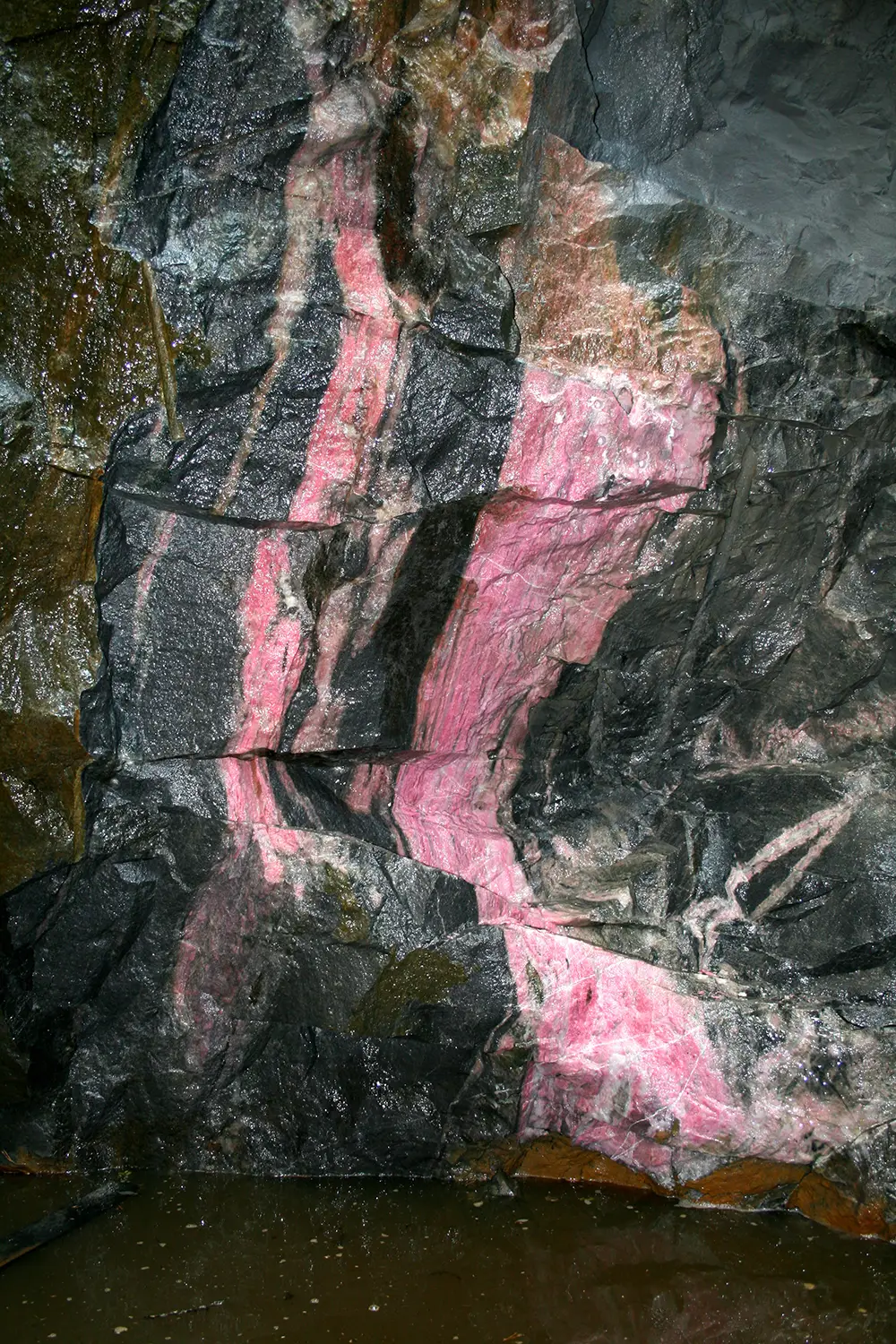
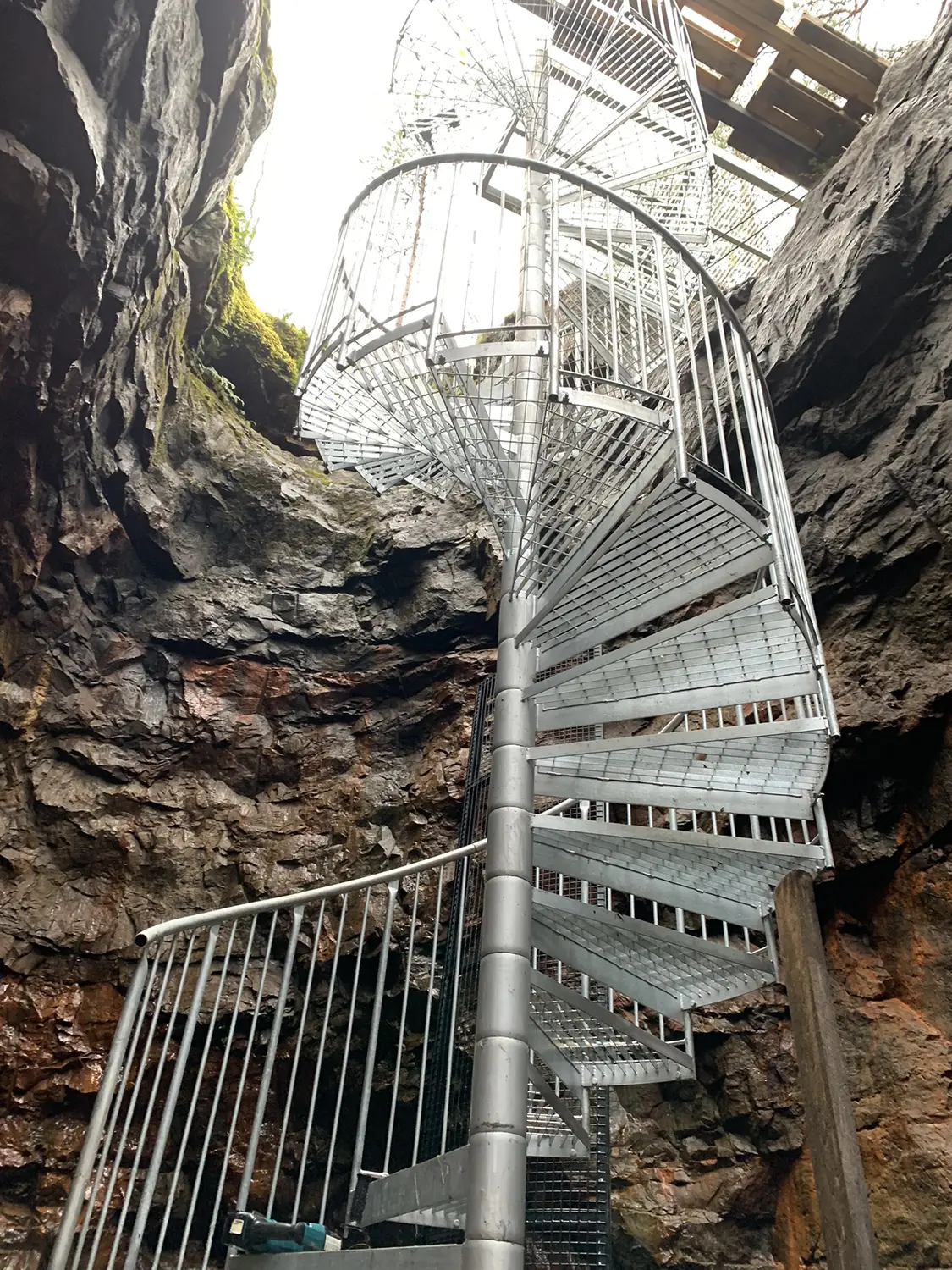
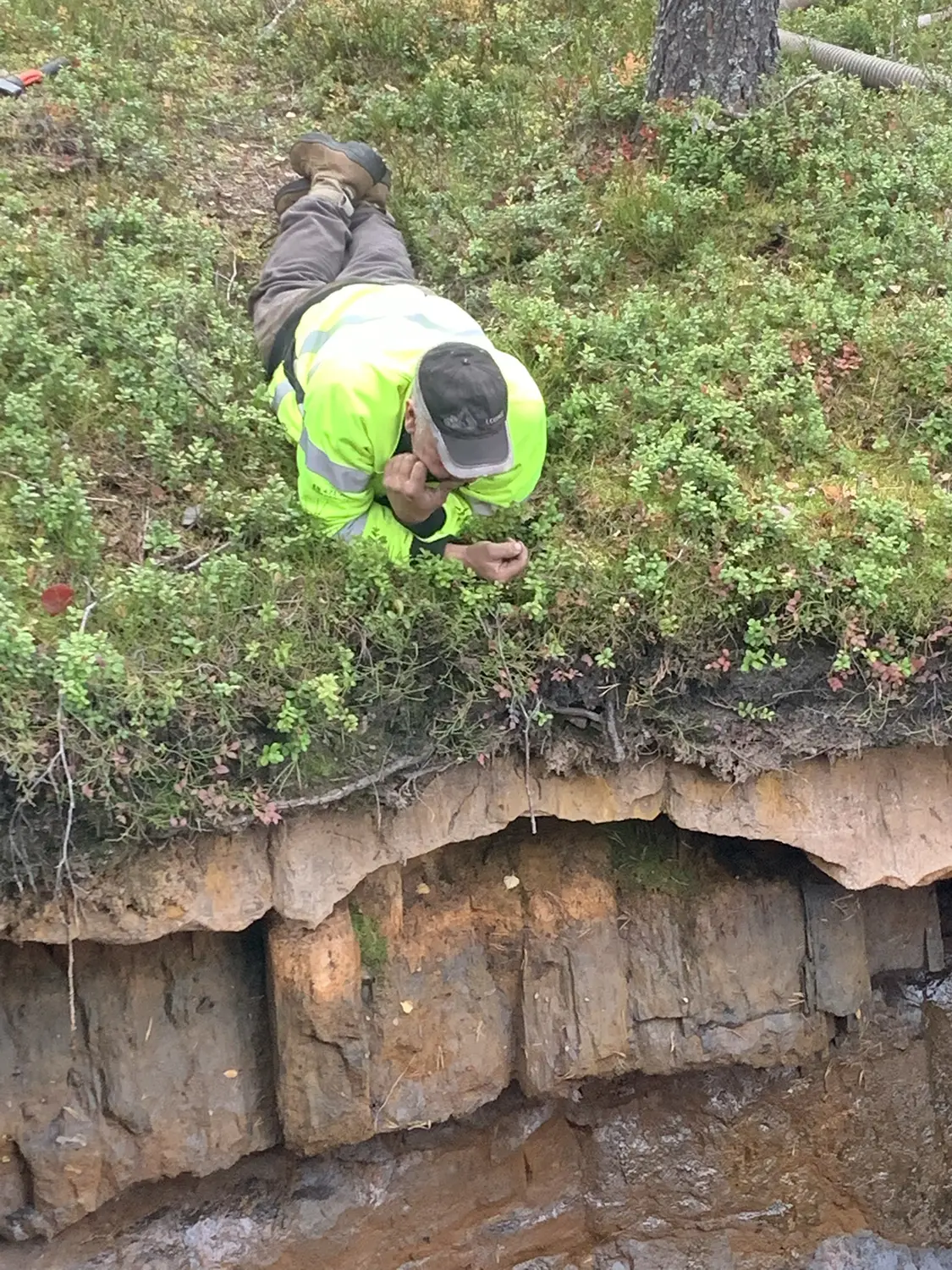
The rhodonite vein can be admired at the bottom of Mine 14.
The specialty of Witting is Ylistaro’s municipal stone, rhodonite (Ylistaro is now part of the city of Seinäjoki). Rhodonite is also found elsewhere in Finland, but only as small veins or lenses of a few centimetres. However, deposits of comparable quality suitable for cutting and polishing are not known to exist in usable quantities anywhere else.
In Witting, the deposit is up to around one metre wide and 3–4 metres high. Rhodonite is a gemstone, and in some contexts it is even classified as a semi-precious stone. It was previously assumed that rhodonite in Witting came from only one mine, but in autumn 2021 a large deposit was also discovered in another mine.
The geological history of rhodonite is fascinating. It originates from manganese precipitate deposited on an ancient seabed, which contained a suitable amount of quartz. Around two billion years ago, during a major stage in the development of the bedrock, intense pressure and heat transformed it into rhodonite.
The exact time of discovery of the deposit is not known, but it is certain that rhodonite from Witting was used to make a jewellery box for Empress Alexandra Feodorovna of Russia (1798–1860). The jewellery box was exhibited at the first World Exhibition in the Crystal Palace in London in 1851. According to tradition, even Empress Catherine the Great’s crown contained polished rhodonite from Witting.
It is therefore no surprise that Finnish jewellers value rhodonite highly. It is used, among other things, as the stone in the Ylistaro jewellery piece, as it is the municipal stone of the area. Kalevala Koru, as well as countless other jewellers and hobbyists, also use rhodonite as a material.
Why do new mine pits keep being discovered?
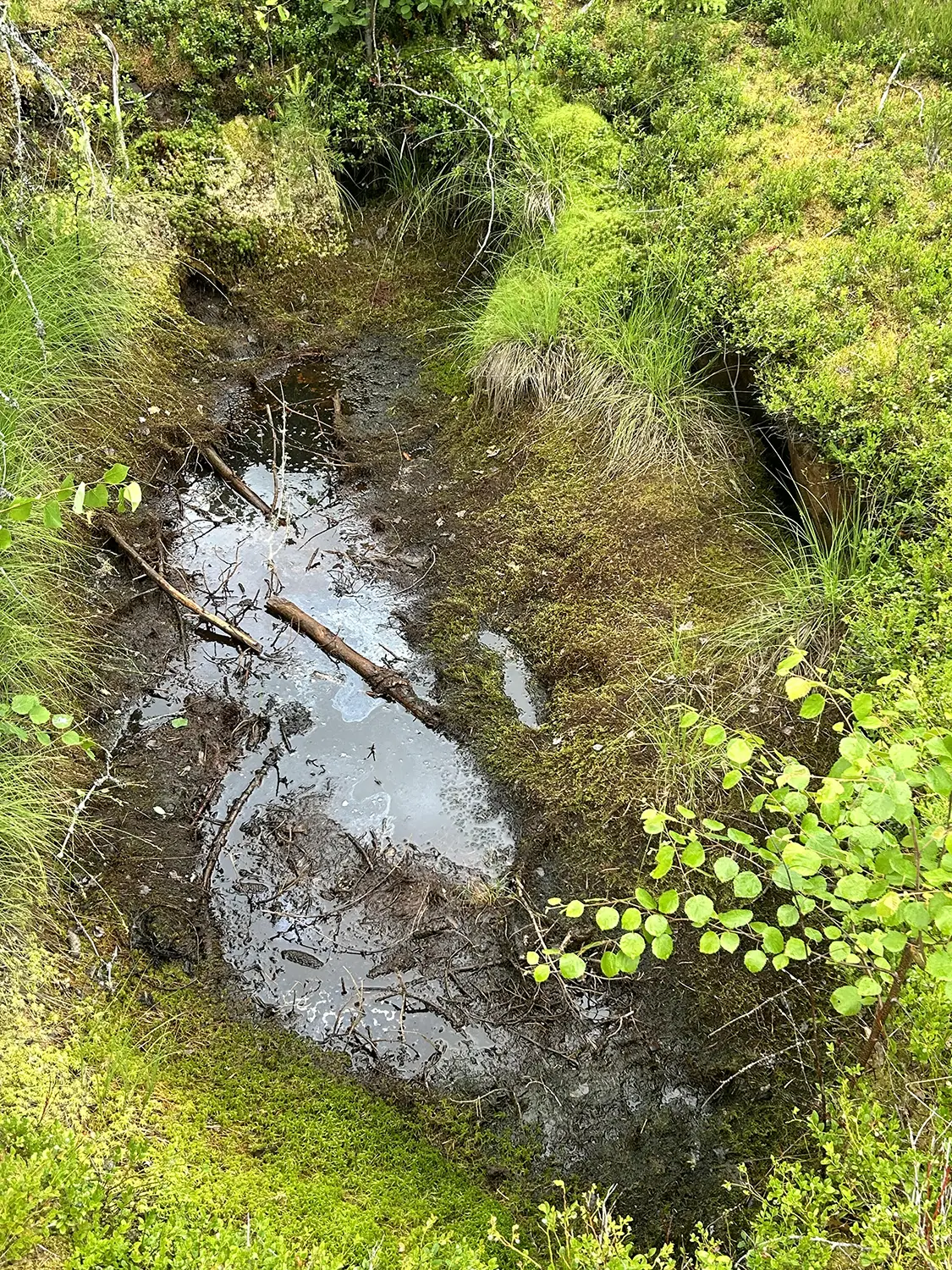
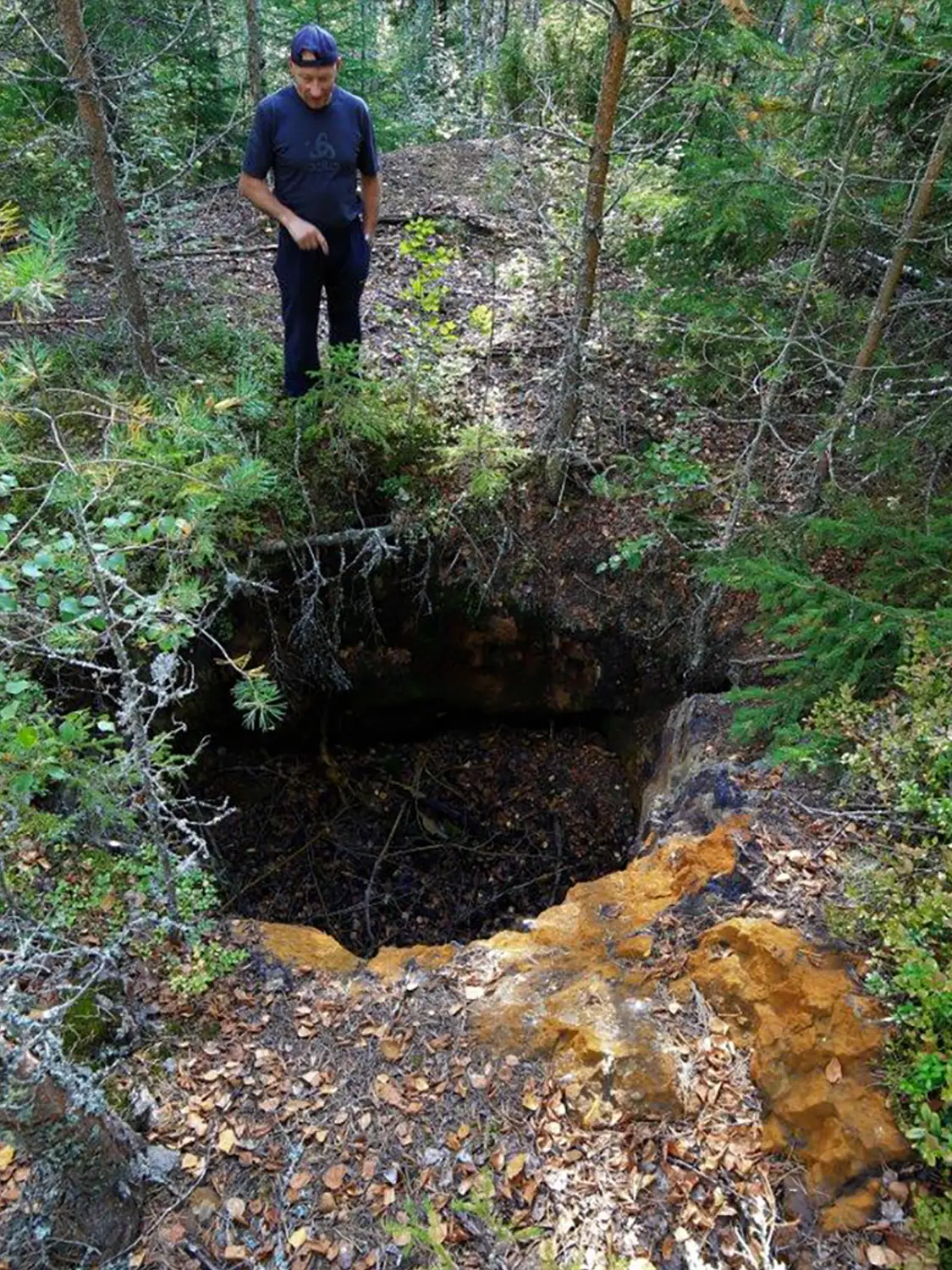
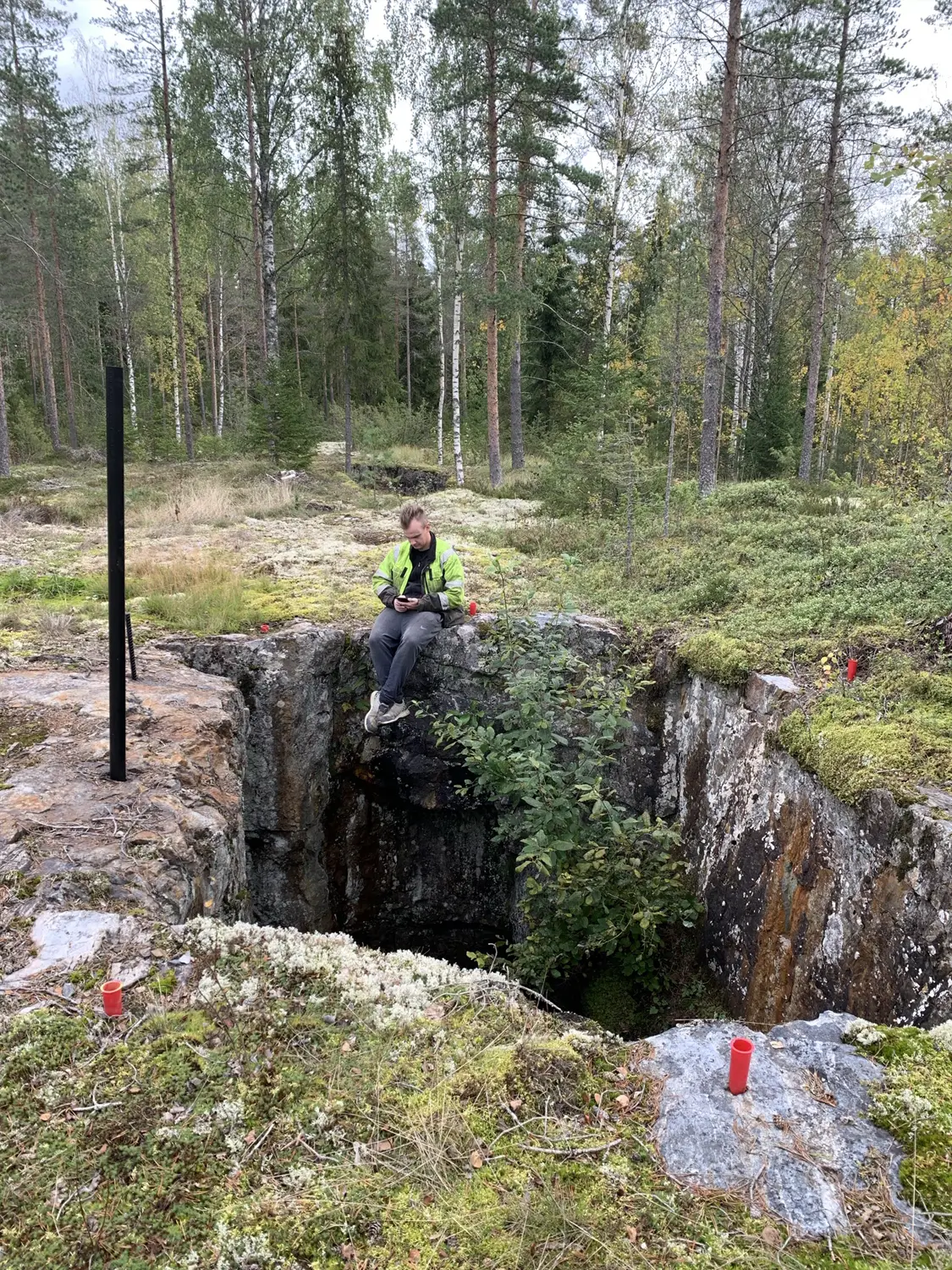
According to current knowledge, more than 20 mine pits of varying sizes are known in the area. In summer 2025, several previously unstudied mine sites were discovered nearby. It may seem surprising that new mines are still being found, but centuries have done their work. The pits are usually filled with water and may look like nothing more than small ponds in the landscape. Over time, leaves and branches have accumulated in them, and some have even become overgrown. Some abandoned pits have also been filled with waste rock from newer mining activities.
The first newspaper articles generated so much interest that, for safety reasons, plans were started for a marked trail and fencing around the pits.