
Witting mines
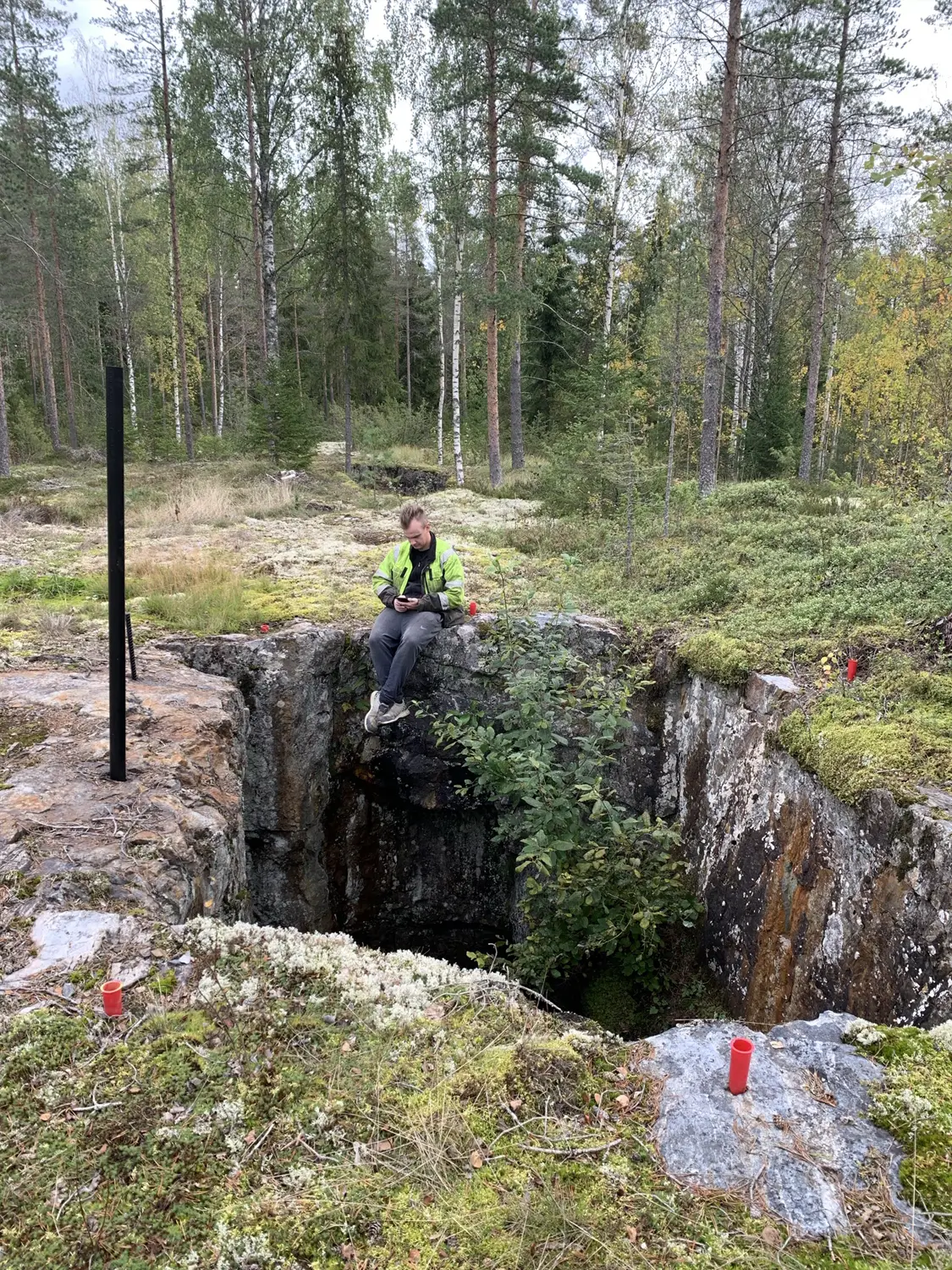
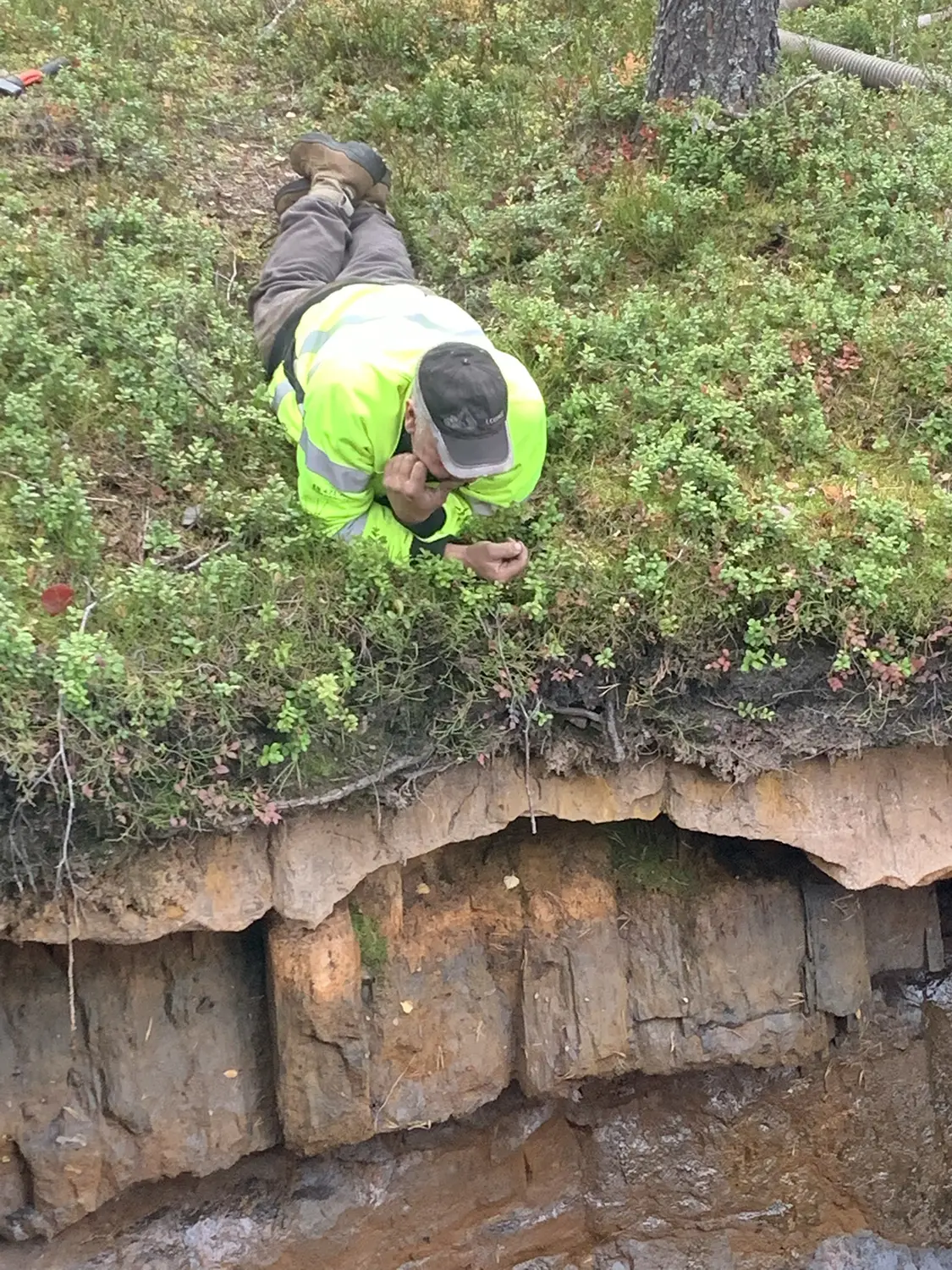
The old Witting mines take visitors on a journey back through centuries of mining history. The area is believed to be the only freely accessible historical mining site of its kind in Finland, where centuries-old mining heritage can still be experienced in its original setting. An easy-to-walk nature trail leads visitors through this unique cultural heritage site, making it an enjoyable destination for the whole family.
Mine 1
Size: 4,1 m x 6,8 m, depth 5,5 m
Extracted volume: 153 m³, 383 tonnes
Mining period: 19th century
Extraction method: Blasting with black powder and later dynamite
Special feature: One of the last mines in the mining area
Mine 2
Size: 3,0 m x 4,4 m, depth 4,5 m
Extracted volume: 59 m³, 148 tonnes
Mining period: 19th century
Extraction method: Blasting with black powder
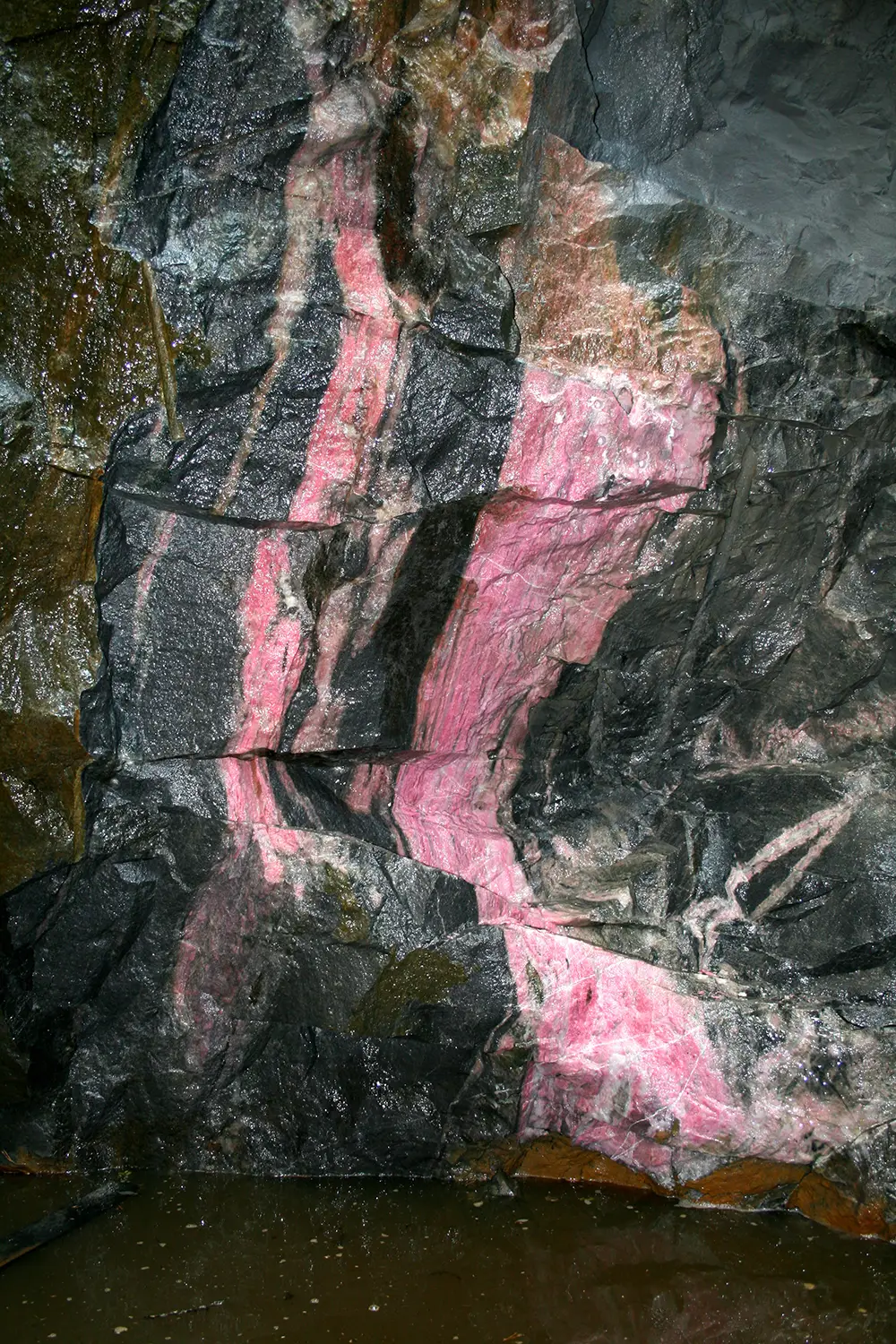
Special feature: The mine contains a rhodonite deposit, also used in jewellery making
Mine 3
Size: 3,3 m x 5,6 m, depth unknown
Extracted volume: Unknown
Mining period: 18th–19th century
Extraction method: Blasting with black powder
Special feature: The mine has been filled with waste rock from nearby mines 1 and 2
Mine 4
Size: 3,6 m x 4,6 m, depth unknown
Extracted volume: Unknown
Mining period: 18th–19th century
Extraction method: Blasting with black powder
Special feature: The mine has been filled with waste rock from nearby mines 1 and 2
Mine 5
Size: 4,7 m x 6,7 m, depth 5,8 m
Extracted volume: 183 m³, approx. 457 tonnes
Mining period: late 16th century
Extraction method: Fire-setting, where rock was heated with fire and rapidly cooled with water, causing it to crack. The fractured rock was then broken apart with wedges, sorted by hand, and transported for further processing
Special feature: Believed to be the largest visible fire-set mine in Finland
Mine 6
Size: 3,3 m x 6,1 m, depth 2,0 m
Extracted volume: 40 m³, 100 tonnes
Mining period: 1637
Extraction method: Fire-setting, where rock was heated with fire and rapidly cooled with water, causing it to crack. The fractured rock was then broken apart with wedges, sorted by hand, and transported for further processing
Special feature: According to archives, the Governor of Ostrobothnia, Melcher Wernstedt, was ordered to burn the rock at Witting and send copper samples to Stockholm for analysis. One of the oldest mines in the area
Mines 7 & 8
Small excavations
Mines 9
Size: 3,4 m x 2,8 m, depth 1,5–2,0 m
Extracted volume: Unknown
Mining period: Unknown
Extraction method: Blasting with black powder
Mine 10
Size: 3,8 m x 2,7 m, depth unknown
Extracted volume: Unknown
Mining period: Unknown
Special feature: Possibly a charcoal pit used for producing charcoal for iron smelting and forging
Mine 11
Size: 2,4 m x 2,0 m, depth unknown
Extracted volume: Unknown
Mining period: Unknown
Extraction method: Blasting with black powder or fire-setting
Special feature: Possible test pit
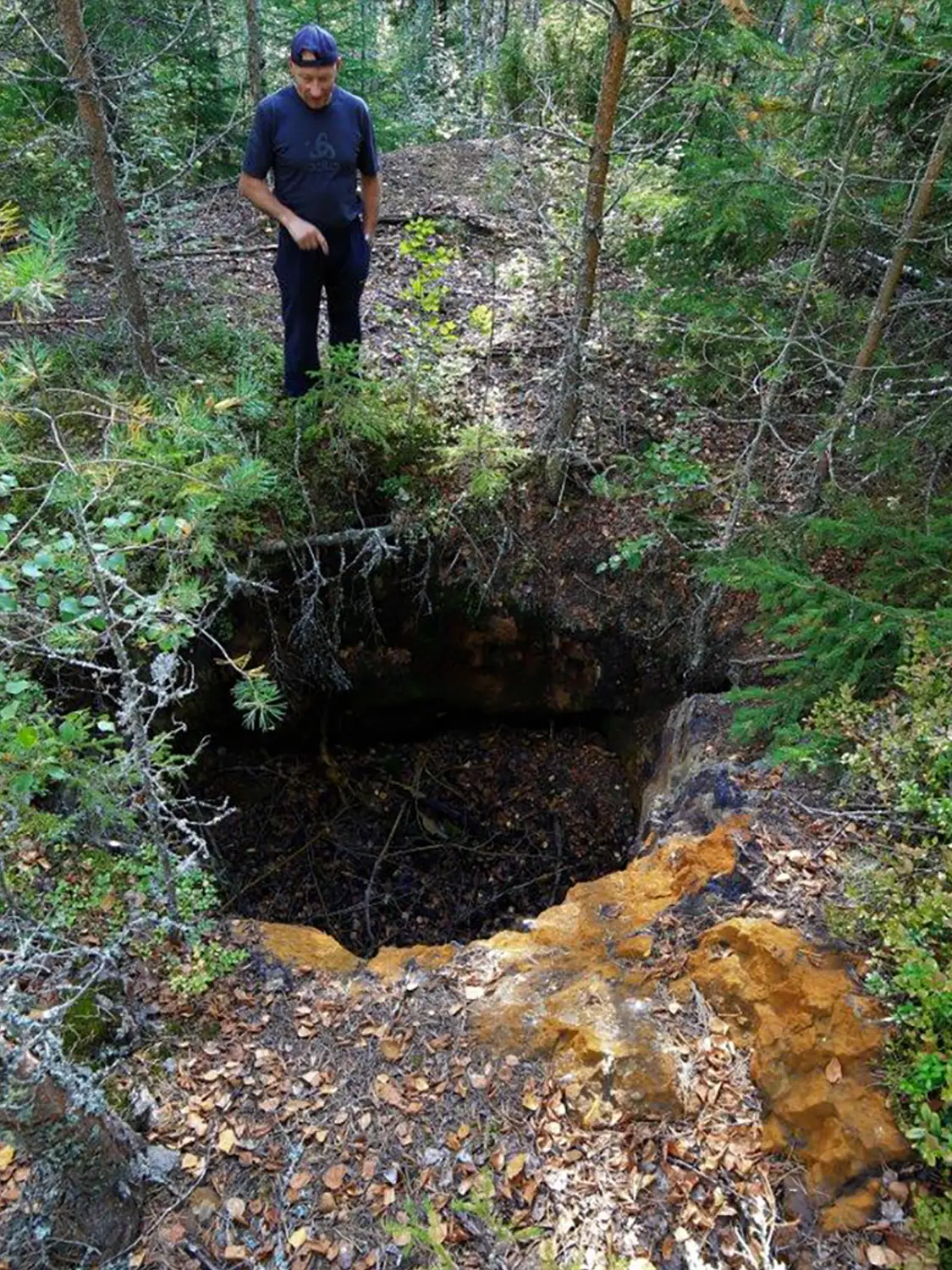
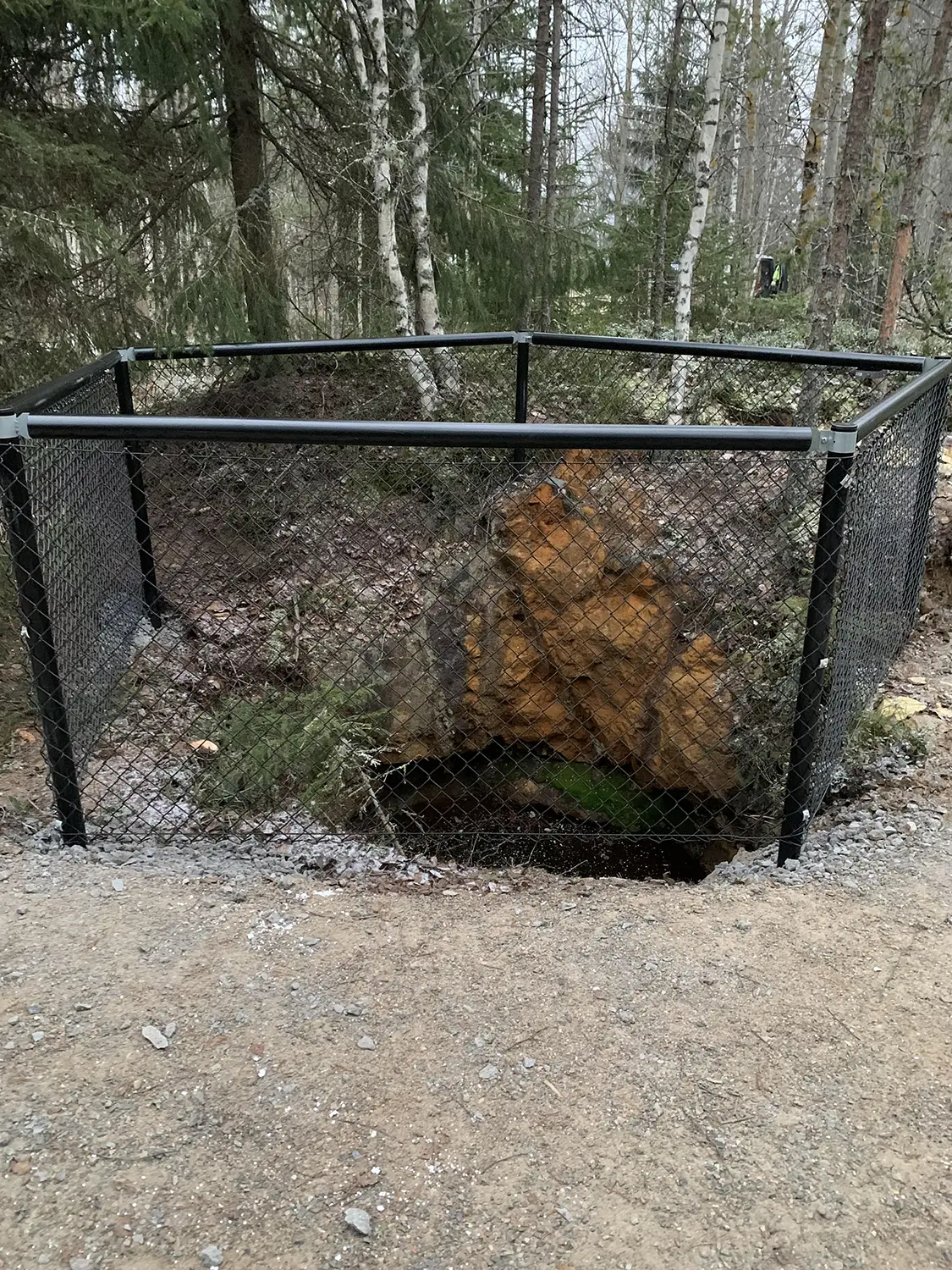
Mine 13
Size: 4,5 m x 4,5 m, depth 4,5 m
Extracted volume: 91 m³, 228 tonnes
Mining period: 16th–17th century
Extraction method: Fire-setting, where rock was heated with fire and rapidly cooled with water, causing it to crack. The fractured rock was then broken apart with wedges, sorted by hand, and transported for further processing
Special feature: Unusual shape. First fire-set mine discovered in Witting (2019). A shelter has been built for safety reasons
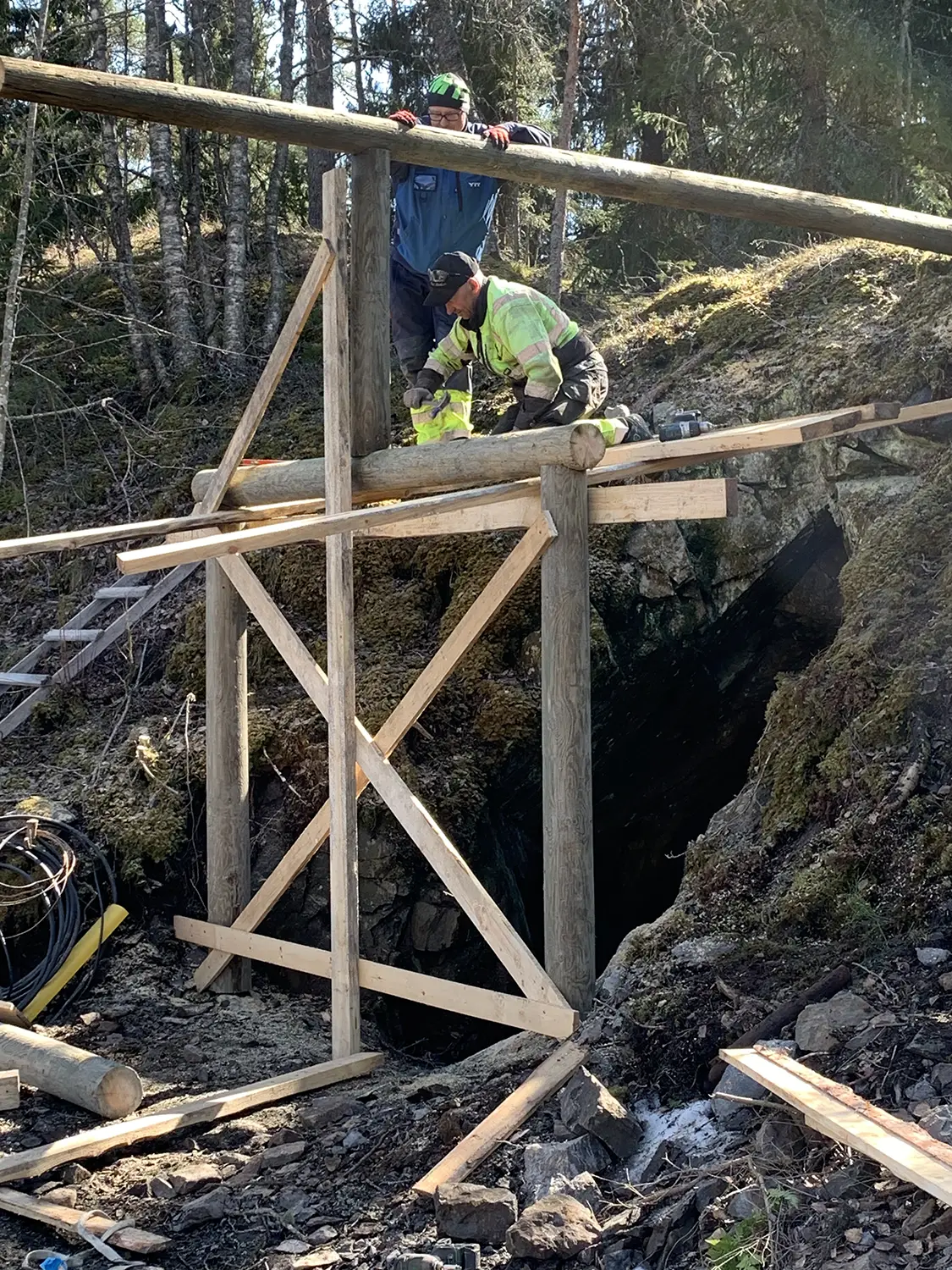
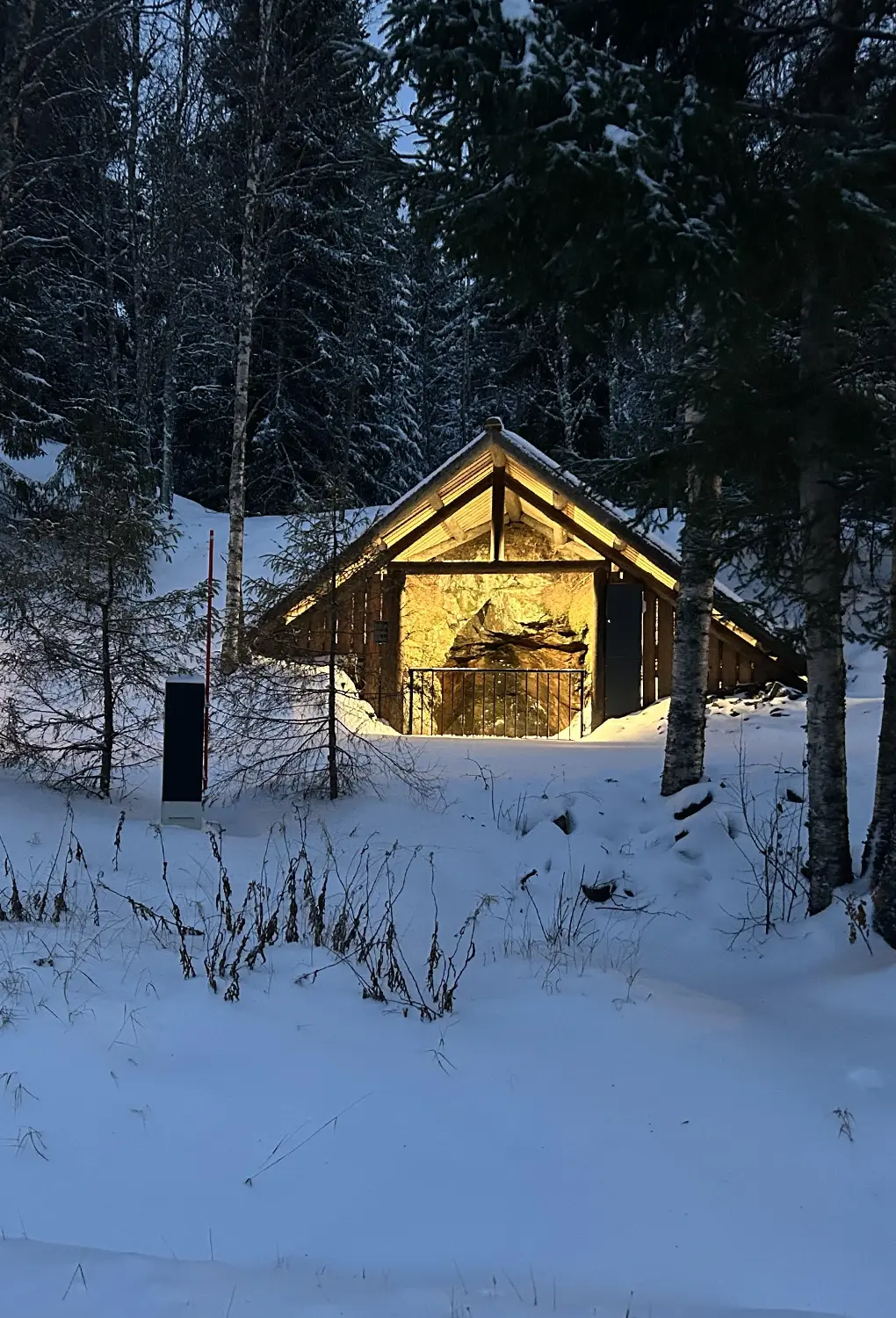
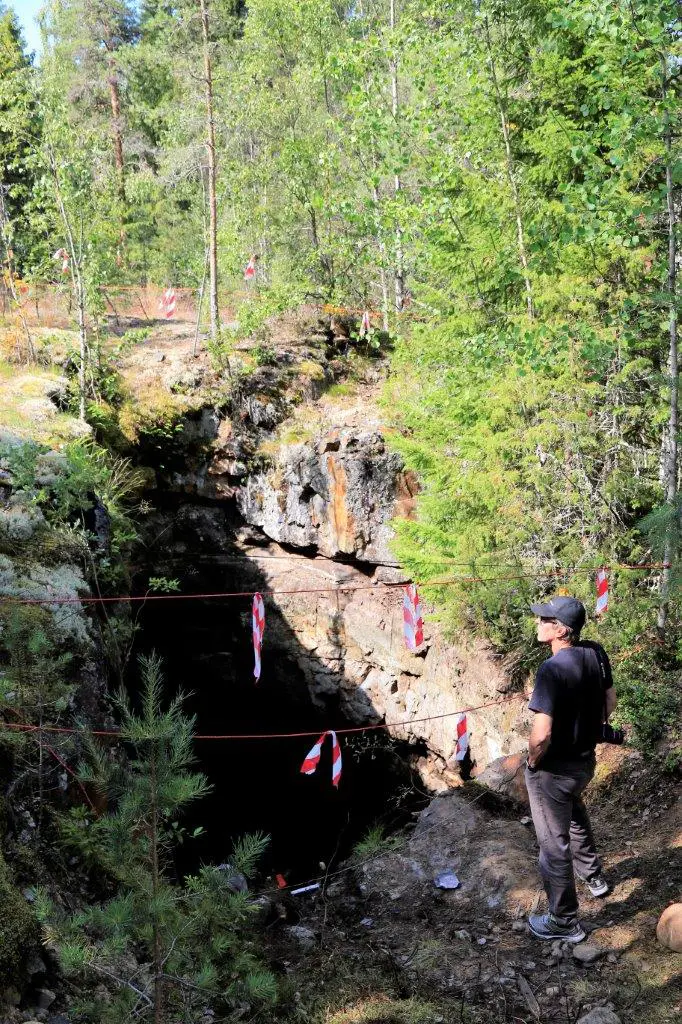
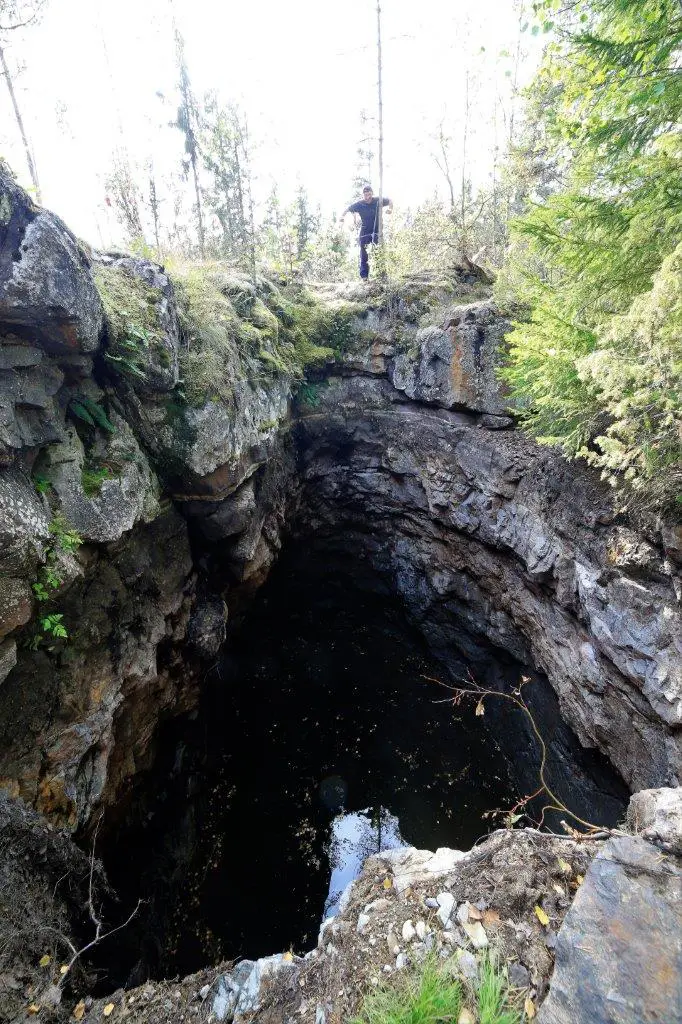
Mine 14
Size: 8,95 m x 5,4 m, depth 9,0 m
Extracted volume: 435 m³, 1 087 tonnes
Mining period: Last claim by Orisberg ironworks in 1829; later mainly rhodonite extraction
Extraction method: Blasting with black powder and later dynamite (including rhodonite extraction)
Special feature: Largest rhodonite deposit in the area. Jewellery made from Ylistaro rhodonite was presented to Empress Alexandra Feodorovna and exhibited at the 1851 London Great Exhibition
Why do new mine pits keep being discovered?
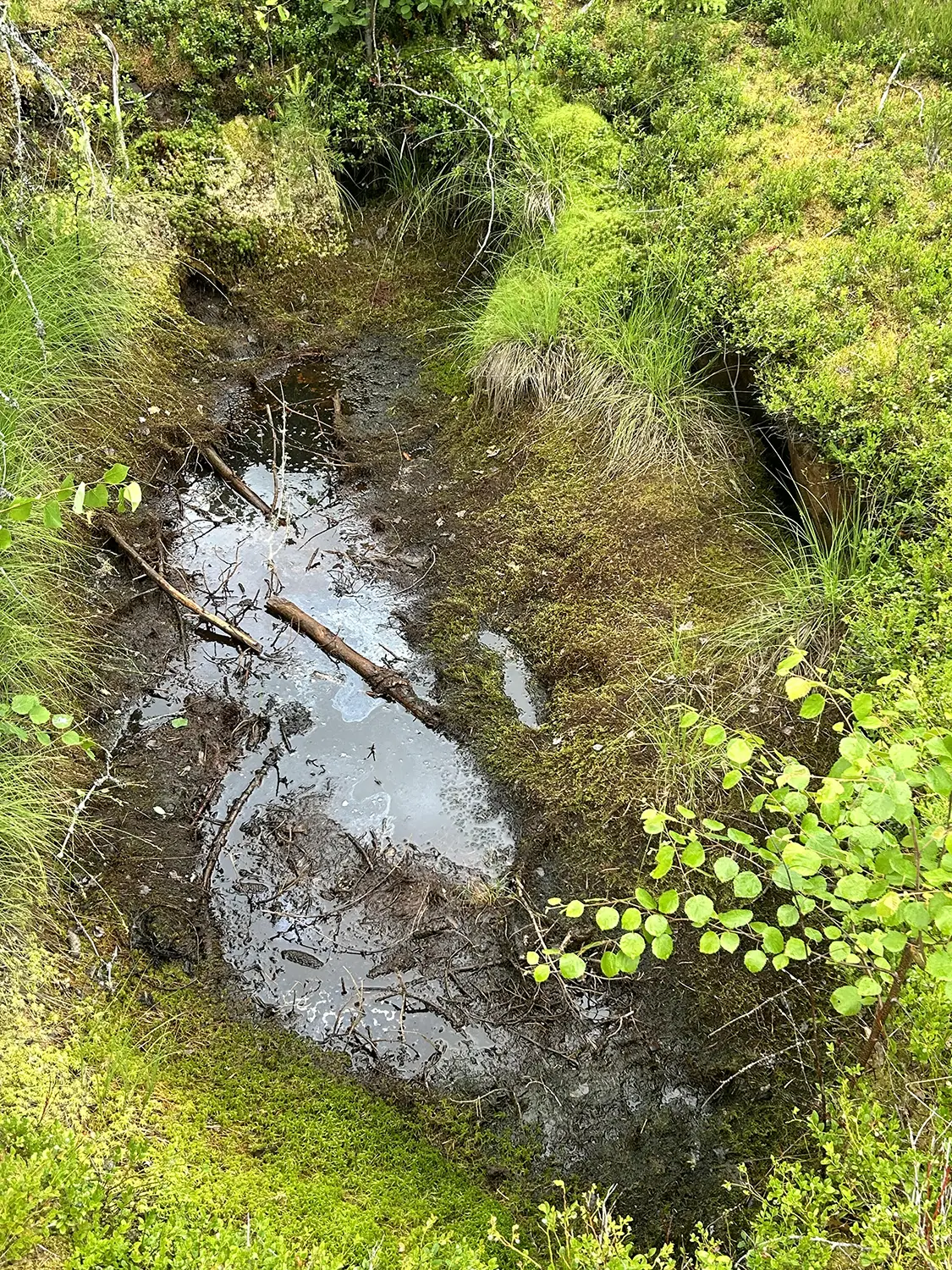
According to current knowledge, more than 20 mine pits of varying sizes are known in the area. In summer 2025, several previously unstudied mine sites were discovered nearby. It may seem surprising that new mines are still being found, but centuries have done their work. The pits are usually filled with water and may look like nothing more than small ponds in the landscape. Over time, leaves and branches have accumulated in them, and some have even become overgrown. Some abandoned pits have also been filled with waste rock from newer mining activities.
The first newspaper articles generated so much interest that, for safety reasons, plans were started for a marked trail and fencing around the pits.